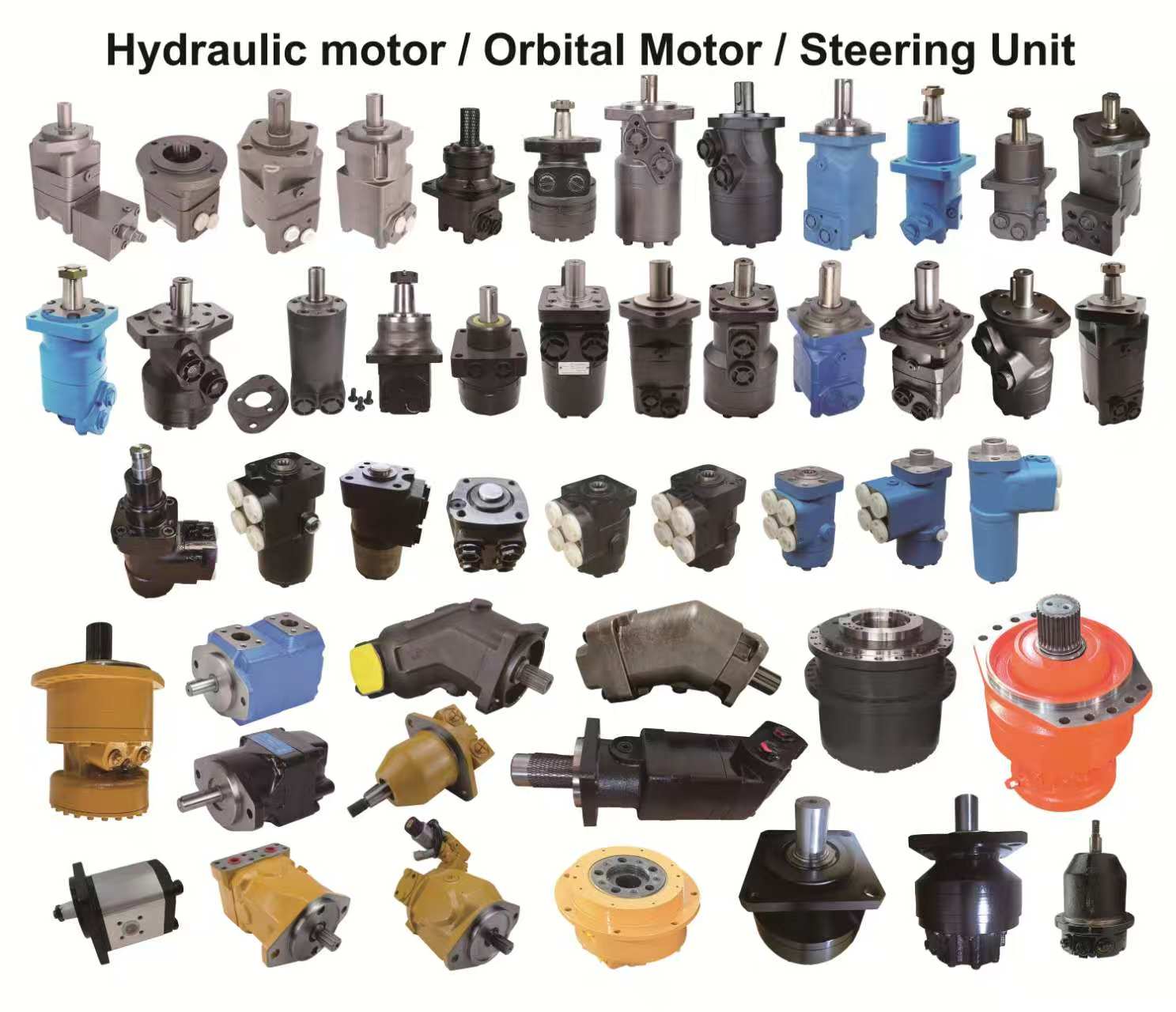
1. Motor Fails to Operate:
This could be due to complete damage of the internal components. Or the hydraulic oil from the control valve has not reached. Further troubleshooting is required.
2. Excessive Hydraulic Fluid Temperature:
If the hydraulic fluid temperature becomes excessively high during operation, the first step is to check for issues with the motor's hydraulic function lines. If the fault persists even after replacing the motor, a motor flushing valve can be installed to facilitate heat dissipation. Additionally, one should listen for any abnormal sounds or unusual noises. This issue may also be caused by air or water contamination within the hydraulic fluid.
3. Excessive noise:
If the hydraulic pump or motor generates loud internal noise, it is likely due to damage within the internal mechanisms. Alternatively, air or water may have entered the hydraulic reservoir.
4. Lack of Power at Low Speeds:
If the hydraulic pump or motor lacks power when operating at low rotational speeds, it is typically caused by severe internal leakage.
5. Oil seal leakage:
This is the most common type of failure. First, check the external drain port and associated lines for any blockages. If no blockages are found, the issue is highly likely due to increased internal leakage within the motor.
6. Normal Start, but Loss of Power After Extended Operation:
The unit starts normally when when the hydraulic liquid is cold, but exhibits a noticeable loss of power—specifically reduced speed—after operating for 2 to 3 hours. This is likely attributable to significant internal leakage.
7. Abnormal Wear on the Output Shaft:
If the output shaft shows signs of wear, first inspect the shaft couplings and splines to ensure proper alignment and engagement. Also, verify that the internal components are receiving adequate lubrication.
Rexroth A2FE Slant-Shaft Hydraulic Motor Complete User Guide (Original Practical Version)
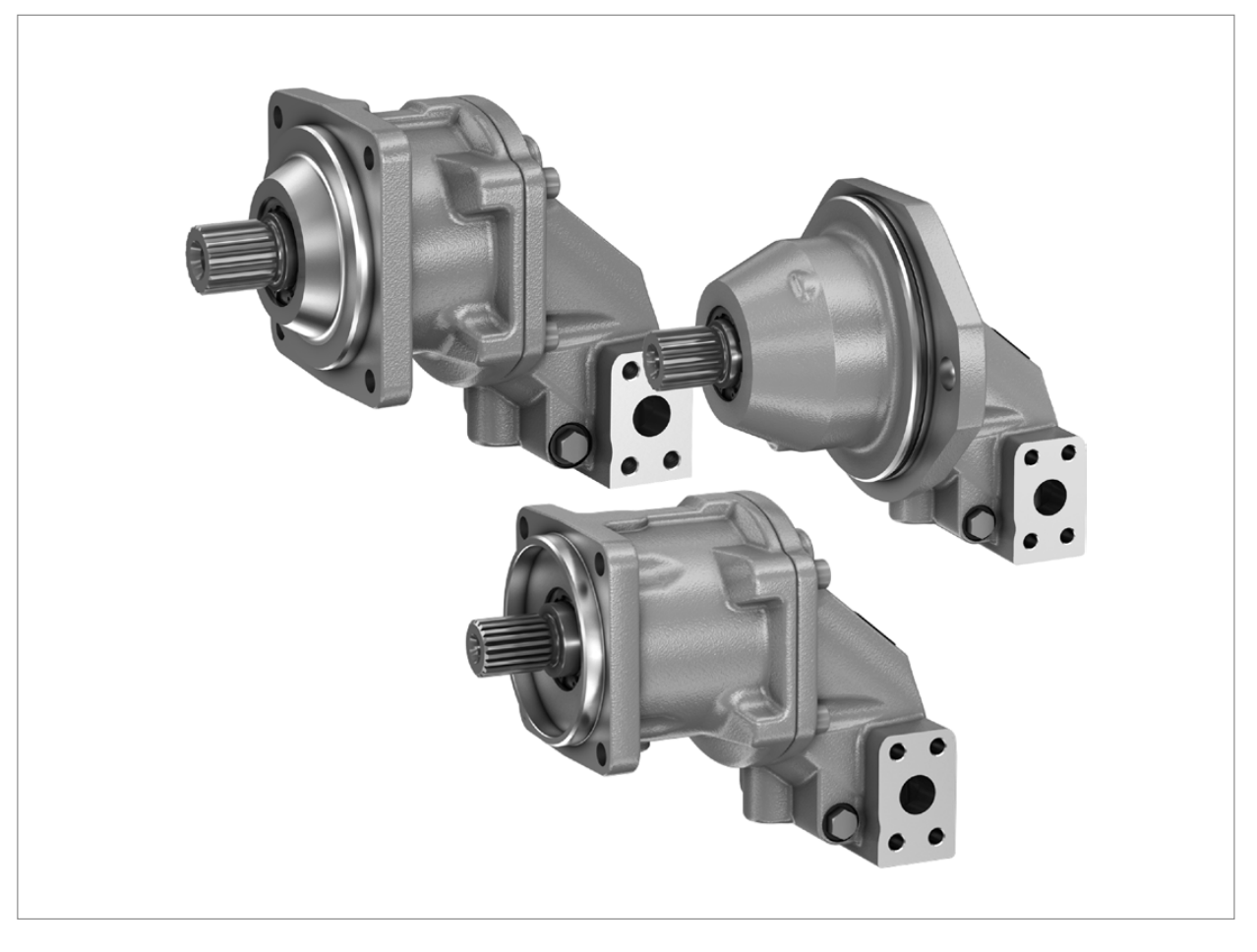
Axial piston quantitative motor
A2FM / A2FE / A2FMT
Practical Guide Table of Contents
I. Basic Understanding Before Use (Core Prerequisite)
II. Installation and Piping Verification (Key Pre-Use Steps)
1. Mechanical Installation Verification
2. Hydraulic Piping Connection Specifications
3. Initial Oil Filling and Bleeding
III. Static Inspection Before Start-up (Required for Every Start-up)
IV. Initial Start-up and Commissioning Procedure (For New Machines/After Overhauls)
1. No-Load Bleeding Start-up
2. Low-Speed No-Load Running-In
3. Gradual Pressure and Speed Increase
4. Load Test Run
V. Standard Operation for Normal Operation
1. Operating Parameter Control
2. Standard Operating Procedures
3. Continuous Operation Monitoring
VI. Standard Shutdown Procedures
1. Daily Temporary Shutdown
2. Long-Term Shutdown (More Than 3 Days)
VII. Usage Prohibitions and Common Misoperations (Key Avoidance Points)
VIII. Daily Maintenance and Supporting Usage Specifications
A2FE is a classic slant-shaft fixed displacement hydraulic motor from Rexroth, widely used in closed-loop hydraulic systems for winches, travel, and slewing in construction machinery. It features high pressure, high torque, and impact resistance. This tutorial, based on original manufacturer technical specifications and practical field experience, covers the entire process from installation and verification to pre-start checks, initial commissioning, normal operation, shutdown procedures, and common precautions. It is compatible with all A2FE series 6/70 models and can be directly used for equipment operation, team training, and equipment maintenance.
I. Basic Understanding Before Use (Core Prerequisites)
The A2FE is a dedicated fixed displacement motor for closed-loop systems. It cannot be operated using the same logic as open-loop motors. Key operating parameters must be strictly adhered to: rated working pressure 250 bar, peak pressure 315 bar, standard compatibility with 46# anti-wear hydraulic oil, normal operating oil temperature range 30℃-60℃, and a maximum temperature not exceeding 80℃. Its operation depends on the system's oil replenishment pressure and flushing circuit. Insufficient oil, air intake, overpressure, and high temperature are the root causes of most malfunctions. All operations are designed to avoid these problems.
II. Installation and Piping Verification (Critical Pre-Use Steps)
The following verifications must be performed before new equipment installation, maintenance disassembly, and restarting after a long period of shutdown; otherwise, abnormal noise, scoring, and internal leakage are highly likely to occur.
1. Mechanical Installation Verification
The motor output shaft and load coupling/reducer connection must ensure a concentricity error ≤0.1mm. Forced connections and tight installations are prohibited. Fixing bolts must be tightened evenly diagonally; unilateral tightening is strictly prohibited to avoid deformation of the housing leading to abnormal wear of the internal plungers and distribution plates. After installation, manually rotate the load to confirm there is no jamming, uneven resistance, or mechanical load jamming or interference.
2. Specifications for hydraulic pipeline connection
Clearly distinguish between the A and B main oil ports (inlet and return oil), the external leakage oil port, and the flushing valve interface. The external leakage oil port must be directly connected to the oil tank and must not be blocked or connected back to the pressure pipeline. Otherwise, back pressure will directly rupture the shaft seal, causing oil leakage. Before installing the pipeline, thoroughly clean the pipe openings of impurities and prohibit any debris from entering the motor interior; the high-pressure oil pipe must not be twisted or tightened, the pipeline must be firmly fixed to avoid joint loosening due to operational vibrations and air intake.
3. Initial Oil Filling and Exhaust
This is the most critical step for the first use of a new machine or during disassembly. Slowly inject clean hydraulic oil from the main oil port or the leakage port into the motor until the oil is full and no bubbles overflow. Completely evacuate the air inside the motor cylinder and the plunger cavity. If there is still air inside, severe abnormal noise and cavitation will occur after startup, causing permanent damage to the flow distributor disc.
III. Static Check Before Startup (Required for Each Startup)
Daily startup does not require repeated oil filling, but 5 static checks must be completed within 3 minutes to avoid 90% of initial faults:
1. Oil level check: The oil level in the tank is within the standard scale range, eliminating problems of oil suction failure and insufficient oil replenishment;
2. Sealing check: There is no oil leakage or loosening at the motor flange, shaft seal, and oil pipe joints;
3. Valve group status: The system's relief valve and directional valve are in the neutral standby position, with the initial pressure set to the lowest;
4. Oil temperature check: In low-temperature environments (below 0°C), the system needs to be preheated; direct heavy-load startup of a cold machine is prohibited;
5. Load status: The equipment is not stuck or under additional load, and is in a no-load standby state.
IV. First Startup Debugging Procedure (New Machine / After Major Overhaul)
The first startup is strictly prohibited from being loaded directly. It must strictly follow the four-step process of no-load exhaust → low-speed running-in → stepwise pressure increase → load testing to protect the internal precision components of the motor.
1. No-load Exhaust Startup
Start the hydraulic pump and keep the system in the neutral position in a no-load state. Repeat the operation of moving the handle to make the motor rotate in both directions alternately. Continue for 3-5 minutes. Release the high-position connector of the pipeline to exhaust until there are no bubbles and the oil is clear. Completely remove the residual air in the system pipelines and eliminate abnormal noises and cavitation hazards.
2. Low-speed No-load Running-in
After the no-load exhaust is completed, keep the motor running at low speed in a no-load state for 20-30 minutes. Observe the condition throughout the process: smooth operation without clattering noise, no abnormal vibration, the housing gradually heats up without overheating, and no leakage. This step can grind the internal parts, remove residual trace air, and stabilize the working condition of the hydraulic system.
3. Stepwise Pressure Increase and Speed Rise
After the no-load running-in is normal, gradually adjust the system pressure from the rated pressure of 30% → 50% → 80% in steps. Run each step for 5 minutes, and finally increase to the rated working pressure. Strictly prohibit starting with full pressure and full load to avoid sudden pressure shock that causes scratches on the piston and the flow distributor disk.
4. Load Test Run
After the pressure and speed are stable, gradually increase the load to observe whether the motor torque output and speed are stable, and whether there are problems such as speed drop, lack of power, or excessive heating. Confirm everything is normal before officially starting the operation.
V. Normal Operating Standard Procedures
1. Parameter Control
During operation, strictly prohibit overpressure, overspeed, and overloading. Short-term peak pressure must not be used for long-term operation. The normal working oil temperature should be controlled within 40°C - 60°C, and the shell temperature should not exceed 70°C. If the temperature rises rapidly, immediately stop the machine for inspection of the flushing circuit, cooling system, and internal leakage. For closed systems, the replenishing pressure must be stable ≥ 20 bar. Insufficient replenishing will directly cause the motor to suck air and accelerate wear.
2. Operation Actions
The operation handle should be operated smoothly with gradual acceleration and deceleration. Avoid sudden starts and stops, and frequent direction changes. Instantaneous impact loads are the main cause of damage to the bearings and flow distributor of the A2FE motor. During equipment operation, if there are abnormal sounds, shaking, abnormal speed, or oil leakage, immediately unload, stop the machine for inspection, and prohibit working with faults.
3. Continuous Operation Monitoring
During long-term continuous operation, inspect once every 1-2 hours: monitor oil temperature, shell temperature, system pressure, check for leaks at joints, and whether there are abnormal noises from the equipment. If the oil temperature continues to rise, power loss, and other problems are found, immediately stop the machine for cooling and troubleshooting.
VI. Standard Shutdown Procedures
1. Temporary Shutdown for Daily Use
First, unload the load, return the control handle to the neutral position, stop the motor from running, and keep the hydraulic pump running without load for 1-2 minutes.
Wait until the system pressure drops and the oil temperature stabilizes, then turn off the equipment power supply.
Avoiding pressure during shutdown can prevent residual system pressure and damage to parts due to fatigue.
2. Long-term Shutdown (More than 3 Days)
After shutdown, take precautions against dust and water. Seal the motor oil port to prevent debris from entering.
Start the equipment in a no-load state for 10 minutes each month to circulate the oil and prevent internal parts from rusting and sealing components from aging and sticking together.
In extremely low-temperature environments, take measures to protect the oil temperature to prevent the oil from solidifying and affecting the next startup.
VII. Usage Restrictions and Common Mistakes (Key Avoidance Points)
1. Do not block the oil outlet that is leaking or block the oil passage of the flushing valve. This will cause excessive back pressure inside the motor, damage the oil seal,
and lead to overheating and burnout.
2. Do not start the machine with cold oil under heavy load or operate at full pressure directly. In low-temperature conditions, the oil has high viscosity,
and insufficient lubrication can easily cause internal scratches.
3. Do not allow system oil contamination or filter failure. Impurities will quickly wear out the distribution plate and piston, resulting in increased internal leakage and reduced power of the motor.
4. Do not force-start the motor with misaligned coupling or when the load is stuck. This will cause overload on the motor shaft and lead to fracture and damage.
5. Do not operate for a long time at excessively high temperatures. If the oil temperature exceeds 80℃, it will accelerate the deterioration of the oil, cause aging of the seals,
and significantly shorten the service life of the motor.
VIII. Daily Maintenance Companion Operating Specifications
1. Oil Maintenance: Use 46# anti-wear hydraulic oil uniformly. The system filtration accuracy should be ≤ 10μm. Replace the oil and filter elements every 2,000 hours.
2. Regular Inspection: Check the seals and pipe connections every 500 hours. Test the motor leakage and replenishment pressure every 1,000 hours.
3. Component Compatibility: When replacing seals, flushing valves, etc., use original factory-compatible components. Avoid faults caused by incompatible parameters.


