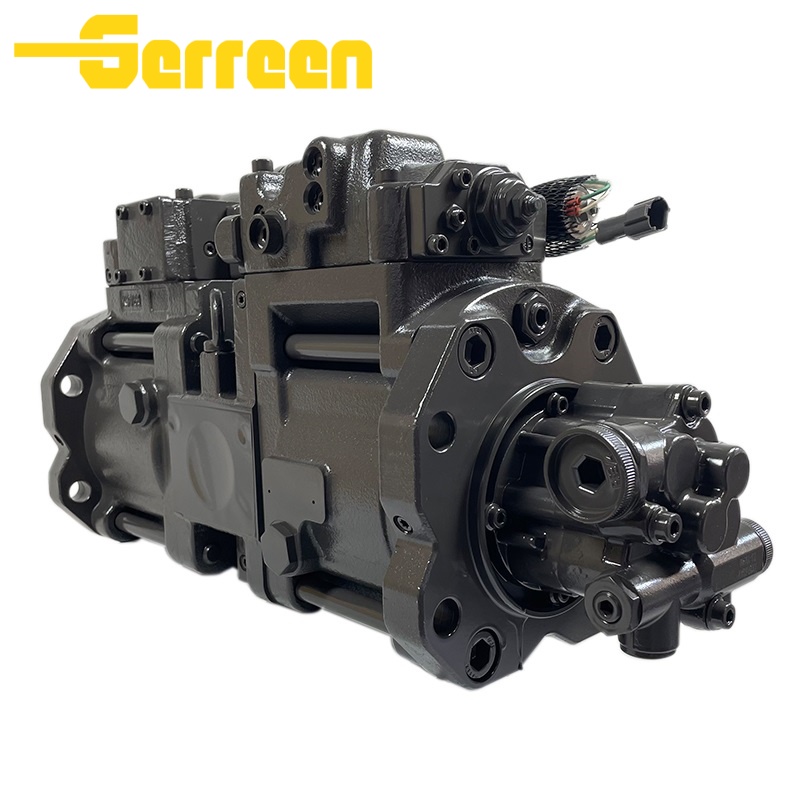
Hydraulic piston pumps are among the most powerful and efficient types of hydraulic pumps used in industrial and mobile applications. Whether you’re working with construction machinery, forklifts, or industrial presses, understanding how hydraulic piston pumps work helps you choose the right pump, improve performance, and reduce maintenance issues.
What Is a Hydraulic Piston Pump?
A hydraulic piston pump is a type of positive displacement pump that transforms mechanical power into hydraulic energy — creating fluid flow under pressure. Unlike gear or vane pumps, piston pumps use multiple pistons arranged in a rotating cylinder block. These pistons reciprocate (move in and out), drawing in fluid and pushing it out at high pressure.
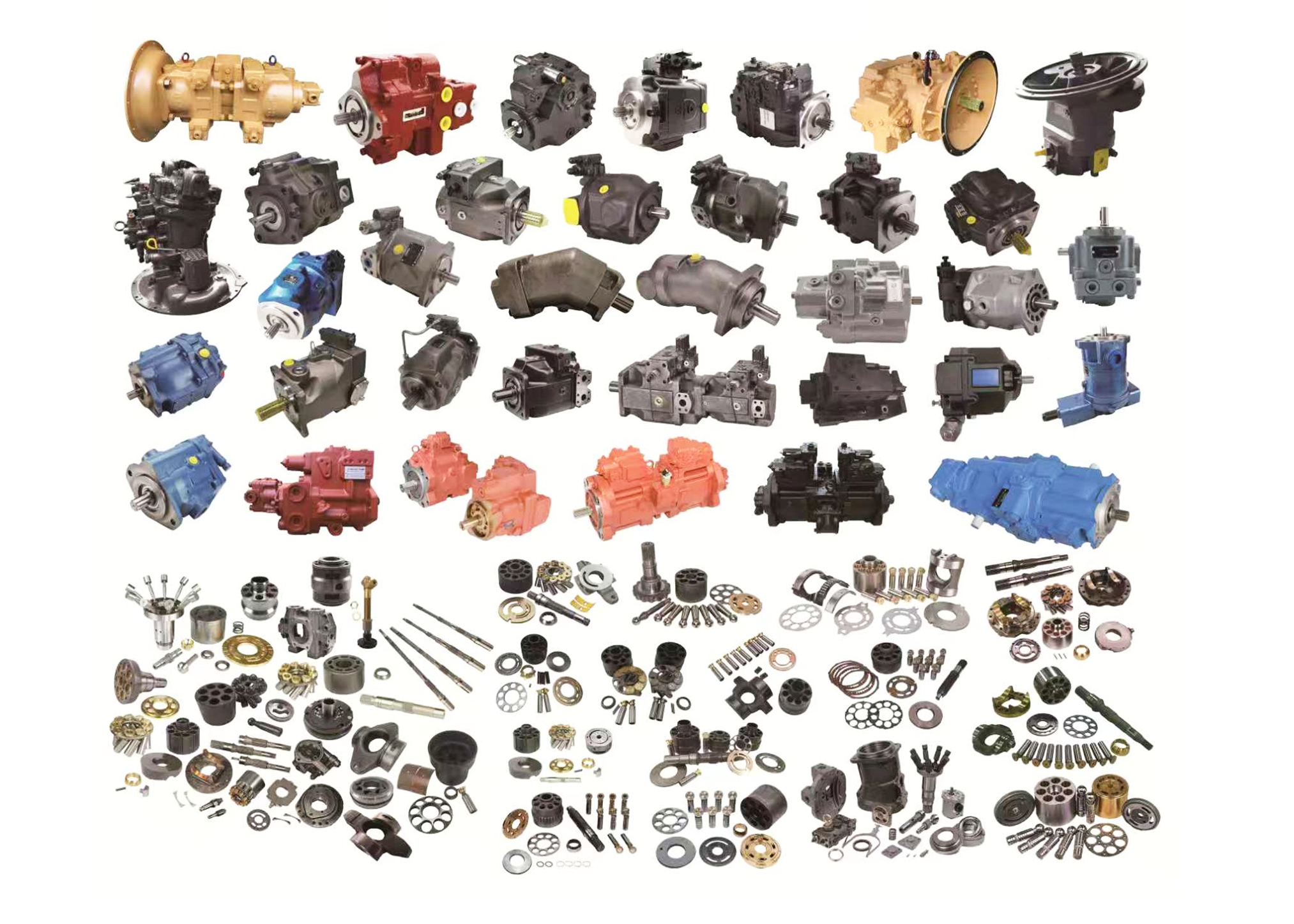
This design enables piston pumps to produce high pressures, precise control, and consistent fluid flow — essential for systems that demand power and reliability.
How Hydraulic Piston Pumps Work
Hydraulic piston pumps operate on the principle of positive displacement, meaning they move a fixed volume of fluid with each cycle of piston motion.
1. Reciprocating Motion
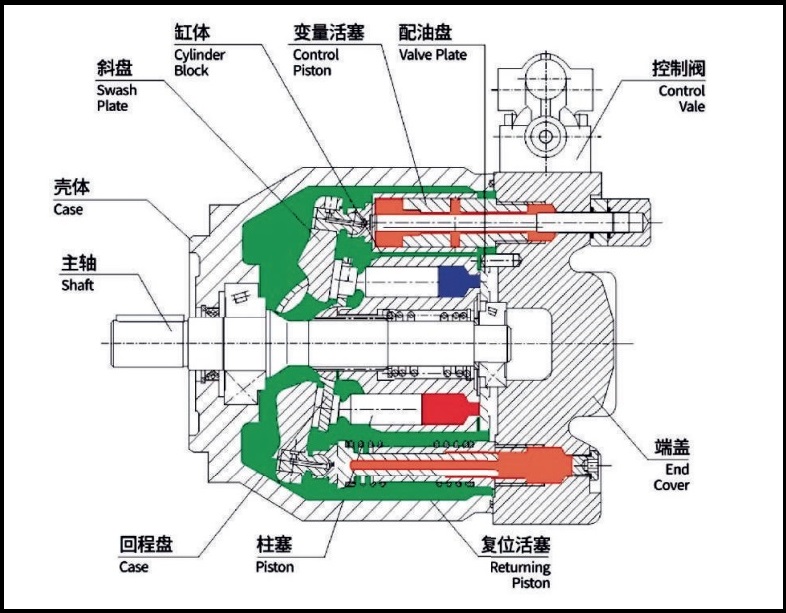
Inside the pump, multiple pistons are mounted around a rotating shaft. As the shaft turns, a cam or swashplate forces each piston to move in and out of its cylinder.
2. Intake Stroke
When a piston retracts, it creates a low‑pressure zone inside the cylinder. This causes hydraulic fluid from the reservoir to flow into the pump through the inlet valve.
3. Discharge Stroke
As the piston moves forward, the trapped fluid is compressed and forced out through the outlet valve into the hydraulic system at high pressure.
4. Continuous Flow
Because pistons operate in sequence around the block, the pump delivers a nearly continuous stream of fluid, reducing pressure fluctuation and vibration.
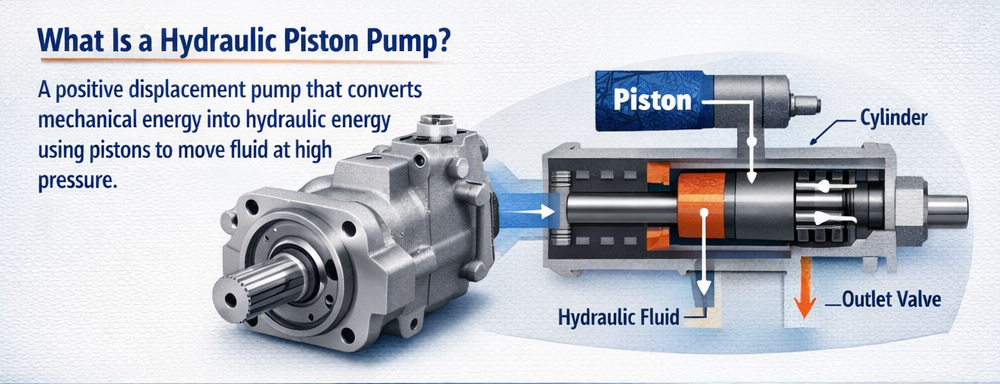
Types of Hydraulic Piston Pumps
Hydraulic piston pumps are generally divided into two main configurations:
Axial Piston Pumps
In an axial design, the pistons are aligned parallel to the shaft. These pumps are commonly used when high efficiency and variable flow control are required. Many modern piston pumps allow variable displacement, making them ideal for systems where flow changes with load.
Axial piston pump. How it works?
 Hydraulic piston pump1.pdf
A10V Series Axial Piston Pump Variable Displacement Pump
Type Code
| A10VS | 0 | 28 | DR | 5 | / | 31 | R | — | V | A | 12 | K83 |
| 1 | 2 | 3 | 4 | 5 | DR |
| 6 | 7 |
| 8 | 10 | 11 | 12 |
1 - Operating Medium
| Mineral oil | Code |
| Mineral oil | No Code |
2- Machinery Classification
| Structure Description | Code |
| Axial piston, swash plate design, variable, used in industry | A10VS |
| Axial piston, swash plate design, variable, used in industry | A10V |
3- Operational Mode
| Operating Mode | Code |
| Open circuit | O |
4- Size
| Nominal displacement (mL/r) | 18 | 28 | 45 | 71 | 88 | 100 | 140 |
5- Control Devices
| Control Devices |
| Code |
| Two-point control, directly operated | | | | | | | DG |
| Pressure: Control | | | | | | | DR |
| Remote pressure control | | | | | | | DRG |
| Pressure and flow control | | | | | | | DFR |
| Pressure and flow control | | | | | | | DFR1 |
| Pressure and power control | | | | | | | DLR |
| Pressure and flow and power control | | | | | | | DFLR |
Contact us today to learn more about our replacement pump options or to request a quote.
Radial Piston Pumps
In radial piston pumps, the pistons are arranged perpendicular to the shaft. The radial design excels in high‑pressure and heavy‑load applications with stable performance and rugged construction.
Each type has unique strengths, and choosing between them depends on pressure level, flow requirements, and system design.
In this design, pistons are arranged radially (like spokes of a wheel) around a central shaft.
Suitable for very high pressure applications
Operate smoothly and quietly
Common in presses, machine tools, and lifting equipment
How Radial Piston Pumps Work

The design of a radial piston pump is significantly different from an axial pump. The radial piston pump consists of a cylinder block, rotating camshaft, and pistons. The pistons are arranged around the cylinder block in a radial pattern and diverge from the camshaft like rays. The rotation of the cam causes the pistons to change from suction to discharge and vice versa.
Variable Displacement Piston Pumps
These pumps allow adjustment of the flow rate.
Can be axial or radial design
Improves energy efficiency
Used where load conditions change frequently
How Variable Displacement Piston Pumps Work
variable displacement piston pump is a type of hydraulic pump that can adjust the amount of fluid it delivers per cycle, depending on system demand.
This makes it highly efficient and widely used in modern hydraulic systems.
Basic Working Principle
The pump works by using pistons that move back and forth inside cylinders to draw in and push out hydraulic fluid.
What makes it “variable displacement” is its ability to change the stroke length of the pistons, which directly controls the flow rate.
Fixed Displacement Piston Pumps
These pumps deliver a constant amount of fluid per cycle.
Why Piston Pumps Are Widely Used
Hydraulic piston pumps are popular because they offer:
 piston pump1.pdf
High Pressure Output
Piston pumps can generate significantly higher pressure than gear or vane pumps — often exceeding 3,000 psi (210 bar). This makes them ideal for demanding applications.
Energy Efficiency
Because these pumps can adjust displacement and reduce wasted flow, they often operate with higher efficiency and less energy loss.
Precise Flow Control
Variable displacement piston pumps can adjust fluid delivery as system demand changes, improving performance and reducing heat.
Durable and Reliable Operation
Piston pumps are built to withstand heavy loads and intense operating conditions — making them suitable for industrial and mobile hydraulic systems.
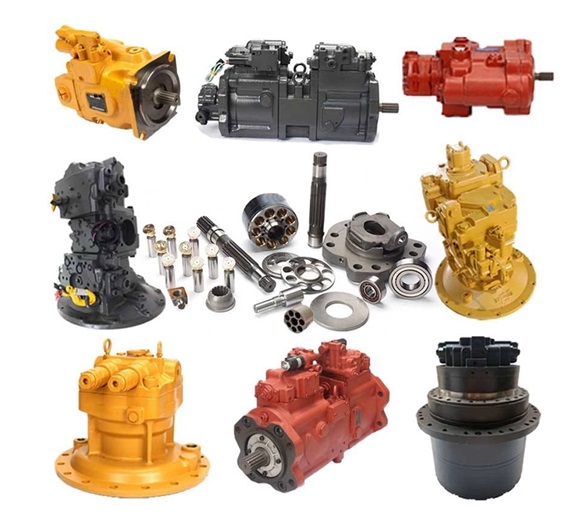
Common Applications
Hydraulic piston pumps are used in many industries, including:
Construction equipment — excavators, loaders, cranes
Industrial automation — presses, injection molding machines
Material handling — forklifts, pallet trucks
Marine hydraulics — winches, steering systems
Heavy machinery — drilling, mining, and processing equipment

Their ability to deliver high pressure and controlled flow makes them a go‑to solution for high‑performance hydraulic systems.
Tips for Maintaining Piston Pumps
To maximize the life of your hydraulic piston pump, follow these best practices:
Use clean, correct‑viscosity hydraulic fluid
Replace filters regularly to prevent contamination
Monitor and maintain correct fluid temperature
Check for air leaks to avoid cavitation
Inspect seals, pistons, and valves periodically
Regular maintenance reduces unplanned downtime and prolongs the service life of the pump.
Hydraulic Piston Pumps Work FAQ
What is a hydraulic piston pump?
A hydraulic piston pump is a type of positive displacement pump that uses pistons moving inside cylinders to move hydraulic fluid. The pistons create pressure that pushes the fluid through a hydraulic system to perform mechanical work.
How does a hydraulic piston pump work?
A hydraulic piston pump works by moving pistons back and forth inside cylinders. When the piston moves backward, it creates suction that draws hydraulic fluid into the chamber. When it moves forward, the piston compresses the fluid and pushes it out through the outlet port at high pressure.
What are the main components of a hydraulic piston pump?
The main components typically include:
These components work together to control the flow and pressure of hydraulic fluid.
What are the different types of hydraulic piston pumps?
The two most common types are:
Axial piston pumps are commonly used in mobile machinery, while radial piston pumps are often used in high-pressure industrial applications.
What are the advantages of hydraulic piston pumps?
Hydraulic piston pumps offer several advantages, including:
These features make them ideal for demanding hydraulic systems
Where are hydraulic piston pumps commonly used?
Hydraulic piston pumps are widely used in:
Construction equipment (excavators, loaders)
Industrial machinery
Aircraft hydraulic systems
Mining equipment
Manufacturing and hydraulic presses
How do piston pumps differ from gear pumps?
Piston pumps use reciprocating pistons to move fluid, while gear pumps use rotating gears. Piston pumps generally provide higher pressure and efficiency, whereas gear pumps are simpler and less expensive.
What is a variable displacement piston pump?
A variable displacement piston pump can adjust the amount of fluid it pumps per rotation. This is typically done by changing the angle of the swash plate, allowing the pump to control flow based on system demand.
Why are piston pumps suitable for high-pressure systems?
Piston pumps have tightly sealed pistons and cylinders that can withstand high forces. This design allows them to generate very high hydraulic pressure compared with many other pump types.
What maintenance do hydraulic piston pumps require?
Proper maintenance usually includes:
Regular inspection of seals and pistons
Maintaining clean hydraulic fluid
Checking for leaks or abnormal noise
Monitoring pressure and performance
Regular maintenance helps extend the pump’s lifespan and ensures efficient operation.