-
Q How do I maintain a hydraulic piston pump?
A Regularly change hydraulic oil and filters, keep the system clean, check operating pressure and temperature, and inspect seals and connections periodically.
-
Q What are the common problems with piston pumps and how to solve them?
A Common problems with piston pumps include insufficient flow rate, inability to reach the required pressure, excessive operating noise, excessive temperature rise, and oil leakage. These are usually caused by poor oil suction, air ingress, or wear of the distribution plate or pistons. Solutions include cleaning the oil filter, eliminating air leaks in the inlet pipe, repairing or replacing worn parts, adjusting the variable displacement mechanism, and using hydraulic oil of the appropriate viscosity.
-
Q How long is the service life of a hydraulic piston pump?
A With proper maintenance, clean oil, and correct operating conditions, a hydraulic piston pump can work reliably for many thousands of operating hours.
-
Q How efficient are hydraulic piston pumps?
A Hydraulic piston pumps have very high volumetric and mechanical efficiency, often exceeding 90%, making them ideal for energy-saving hydraulic systems.
-
Q What hydraulic oil can be used in piston pumps?
A Most hydraulic piston pumps are compatible with mineral hydraulic oil, anti-wear hydraulic oil, and some biodegradable fluids. Always check fluid compatibility before use.
-
Q How do I choose the right hydraulic piston pump?
A You should consider working pressure, flow rate, speed, control type, mounting method, application requirements, and hydraulic fluid type. Professional technical support can help select the correct model.
-
Q What materials are hydraulic piston pumps made of?
A They are usually made of high-strength cast iron or steel housings with hardened steel pistons and precision-machined components for maximum durability and wear resistance.
-
Q What are the advantages of hydraulic piston pumps?
A Hydraulic piston pumps offer high efficiency, high pressure capability, long service life, precise control, low energy loss, and excellent reliability in demanding applications.
-
Q What precautions should be taken when installing a piston pump?
A 1) Hydraulic pumps with poor self-priming capabilities should not have filters installed on their suction lines.
2) When piping, avoid creating excessive suction resistance for the hydraulic pump.
3) Avoid connecting the overflow valve's drain line to the hydraulic pump's suction line.
4) Avoid connecting the hydraulic pump's external leakage oil line to the pump's suction line.
-
Q What pressure can hydraulic piston pumps handle?
A Hydraulic piston pumps can typically operate at pressures up to 350 bar (5000 PSI) or even higher, depending on the model and design.
-
Q What is a variable displacement piston pump?
A Variable displacement piston pump can change its output flow by adjusting the swash plate angle or control mechanism. This allows the hydraulic system to save energy and improve efficiency.
-
Q What are the main applications of hydraulic piston pumps?
A Hydraulic Systems: Piston pumps are commonly used in hydraulic systems for heavy machinery, construction equipment, and industrial applications that require robust and powerful pumps to generate hydraulic pressure for tasks such as lifting, excavating, and pushing.
Oil and Natural Gas Industry: In this industry, plunger pumps are used in various applications such as drilling, mud circulation, hydraulic fracturing, and crude oil transportation.
Manufacturing and Industrial Machinery: Large manufacturing and industrial processes rely on plunger pumps for tasks such as injection molding, die casting, metal forming, and hydraulic presses.
Marine and Ship Systems: Plunger pumps are used in ships' hydraulic steering systems, cargo handling, and deck machinery.
Mining Equipment: In the mining industry, plunger pumps are crucial for operating heavy machinery such as excavators, loaders, and haul trucks, and for controlling hydraulic roof supports in underground mines.
Injection Molding: Large injection molding machines rely on plunger pumps to provide accurate and consistent hydraulic pressure for the molding process.
Agricultural Machinery: In modern agricultural equipment such as tractors and combine harvesters, plunger pumps are used in hydraulic systems to control various functions.
-
Q What is the difference between a piston pump and a gear pump?
A Piston pump can operate at much higher pressure,has higher efficiency and offers variable displacement control,while a gear pump is simpler, cheaper and used mainly for low to medium pressure systems.
-
Q What are the main types of hydraulic piston pumps?
A The main types are axial piston pumps and radial piston pumps.Axial piston pumps are the most common and are used in mobile and industrial hydraulic systems,while radial piston pumps are typically used for very high-pressure applications.
-
Q How does a hydraulic piston pump work?
A Hydraulic piston pump works by using pistons that move back and forth inside a cylinder block. As the pistons move, they draw hydraulic oil in and then push it out at high pressure, creating a continuous hydraulic flow. Then the hydraulic drives the hydraulic cylinder, generating power for the hydraulic system.
-
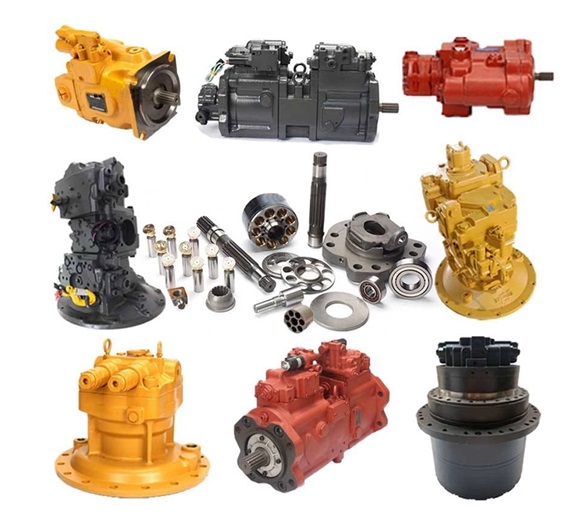
Q What is a hydraulic piston pump?
A Hydraulic piston pump is a high-pressure hydraulic pump that uses reciprocating pistons to move fluid and generate flow. It is widely used in heavy-duty hydraulic systems because of its high efficiency, high pressure capability, and precise flow control.
-
Q How does a hydraulic directional control valve work?
A Directional control valve controls the flow path of hydraulic oil by moving a spool or poppet, allowing oil to flow in different directions to control cylinder or motor movement.
-
Q What are the main types of hydraulic valves?
A The main types of hydraulic valves are directional control valves, pressure control valves, and flow control valves. Each type has a different function in the hydraulic system.
-
Q What are hydraulic valves used for?
A Hydraulic valves are used to control start, stop, direction, speed, and force of hydraulic actuators in machines such as excavators, presses, injection molding machines, forklifts, and industrial equipment.
-
Q What is the function of a relief valve in a hydraulic system?
A A relief valve:
Limits maximum system pressure
Protects pump, valves, hoses, and cylinders
Opens automatically when pressure is too high and sends oil back to tank
It is a safety valve for the hydraulic system.


